Mental Recovery: The Most Overlooked Wellness Practice of Our Time


Mental Recovery: The Most Overlooked Wellness Practice of Our Time
Over the last decade, the world has fallen in love with “recovery.” Cold plunges, PEMF therapy, red light panels, grounding mats, supplements, breathwork — practices that would’ve been labeled “witchcraft” twenty years ago are now mainstream and celebrated as cutting-edge wellness.
But for all the focus on physical optimization, there’s a part of wellness we’re still not treating with the same intentionality:
Mental recovery.
Not mental health as a vague concept…
Not “taking a break”…
Not “self-care” in the commercialized sense…
I’m talking about the deliberate, structured recovery of the mind — the same way athletes recover their bodies.
And the truth is, this idea has been weighing heavy on my heart lately. A close friend recently attempted suicide, and several others in my circle have been touched by similar battles. This time of year especially seems to press down on people silently and relentlessly.
It made me realize something:
We know exactly how to recover physically — but almost no one knows how to recover mentally.
Ask people how to bounce back after a marathon or a hard workout and they can list ten strategies off the top of their heads. But ask how they help their minds recover from chronic stress, emotional overload, grief, decision fatigue, burnout, or trauma… and you get some version of:
“I just need a little break.”
But a “little break” is not mental recovery.
Mental Stress is Physical Stress — And Science Proves It
This isn’t theory, feeling, or opinion.
NIH research shows that chronic mental strain activates the same biological stress pathways as physical overtraining or injury. When your mind is overloaded, your body responds the same way it would if you were hurt.
According to the National Institutes of Health:
“Chronic psychological stress activates the neuroendocrine and biological systems responsible for inflammation, immune suppression, metabolic disruption, and hormonal imbalance.”
(NIH, Stress and Health)
In other words:
When the mind stays stressed, the body breaks down.
It’s not “in your head.” It’s in your cells.
This means mental recovery isn’t optional — it’s foundational. It’s as essential as muscle rest, hydration, sleep, and physical recovery routines.
Rest Isn’t Just Sleep — It’s Seven Different Types
The American Psychological Association identifies seven types of rest — mental, sensory, emotional, creative, social, physical, and spiritual. Most of us meet one or two (usually physical rest and maybe emotional rest), but almost no one intentionally meets all seven.
Mental recovery often requires:
sensory rest (stepping away from screens, alerts, noise)
mental rest (letting the mind be still, even briefly)
emotional rest (safe space to feel without performing)
creative rest (nature, art, quiet inspiration)
These types of rest aren’t luxuries — they’re actual biological needs.
Deep Rest Is a Biological Reset — Not a Luxury
UCSF published research describing “deep rest” — activities that reset the nervous system and undo the cellular wear and tear caused by chronic stress.
We’re talking about simple things like:
walking in nature
meditative breathing
quiet reflection
journaling
unplugging from technology
sensory deprivation
mindfulness practices
These aren’t feel-good extras — they literally reverse the physical damage caused by overload.
Time Is Precious — Life Is Priceless
There’s only one thing more precious than time, and that’s life itself. And yet most of us treat our time like it’s cheap — something we’ll always have more of, something we’ll get around to later.
But mental recovery requires intentional time carved out on purpose — not squeezed in “if there’s time.”
Sometimes that means taking 15–30 minutes in the morning, evening, or midday to pause.
Sometimes that means putting a hard stop on your phone, closing the laptop, and breathing in silence.
Most people never give themselves that space unless they’re forced to.
Sometimes You Need a Bigger Reset
There are times when the mind can’t recover within the same environment that’s draining it.
That’s when intentional disconnection becomes essential — stepping away from the noise, the expectations, the roles, and the constant stimulus of everyday life.
For some people, that’s a silent retreat.
For others, a weekend in the woods.
For some, it’s a guided wellness experience, therapy, or meditation retreat.
And for many, it’s simply being somewhere quiet, calm, and free of distractions — a place where the mind doesn’t just “rest,” it recovers.
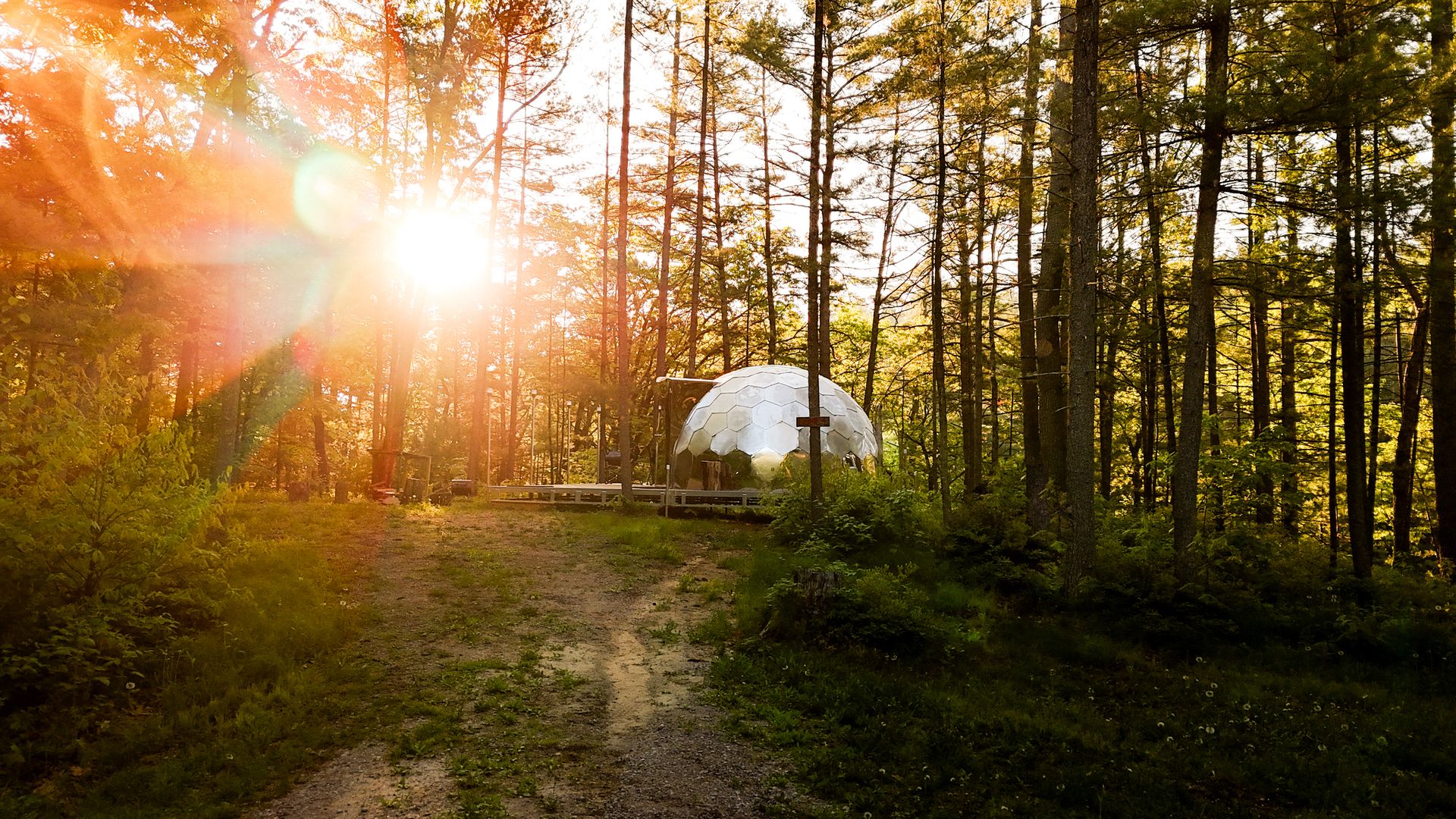
Sandstone is one example of that kind of reset — a space built intentionally for quiet connection, fewer distractions, stillness, conversation, nature, and breathing room. Not as a sales pitch, but as a reminder:
Sometimes stepping away is the only way the mind can actually heal.
Mental Recovery Should Become the Next Wellness Revolution
We’ve normalized cold plunges.
We’ve normalized red light therapy.
We’ve normalized energy work, biohacking, intermittent fasting, and breathwork.
Now we need to normalize mental recovery.
Not as an afterthought.
Not as a stigma.
Not as something to hide.
But as a daily and weekly practice — a wellness modality every bit as real as the ones we adopt for the body.
Because caring for the mind is caring for the body.
And caring for the body requires caring for the mind.
If we can give our minds the same respect we give our muscles, our breath, our diet, our sleep, our supplements — we might save more people from invisible battles they’re fighting in silence.
And we might give ourselves a chance to breathe, reset, reconnect, and heal in ways we didn’t even realize we needed.
When we give our minds a true opportunity to recover, everything in life shifts. We become more present. More even-keeled. Less reactive. More patient. More intentional. We communicate better. We notice more. We feel more grounded and less overwhelmed.
Mental recovery isn’t just about feeling better — it’s about living better. Living more life, not just pushing through it.
And here’s the honest challenge:
Most of us have no idea how mentally fatigued we actually are.
We’ve normalized stress. We’ve normalized being overwhelmed. We’ve normalized running on fumes.
So before anything else, I want to encourage you to pause and do a quick self-assessment. Nothing complicated — just an honest check-in with yourself.
Ask:
How often do I feel mentally drained?
How often am I truly present?
Do I make intentional time for quiet and stillness?
Do I have recovery routines for my mind — not just my body?
When was the last time I did something for mental restoration, not distraction?
If you’re unsure where to start, I’ve created a simple worksheet — a quick scorecard — to help you see where you really are on the stress/recovery spectrum. Sometimes just seeing it in front of you is the wake-up call.
And if you discover you’re running high on mental stress and low on mental recovery, you’re not alone — and you’re not stuck. Small daily resets and intentional restorative moments can make a massive difference. And sometimes, stepping away into quiet, into nature, into a place without distractions, can give your mind the space it’s been trying to find for years.
Whatever path you choose — whether it’s morning stillness, journaling, sensory rest, unplugging, meditation, or a quiet retreat like Sandstone — I hope you choose something.
Your mind deserves to recover just as much as your body does.
Your life is too precious to live in survival mode.
Mental Recovery Assessment Worksheet
Simple, score-based, and built to pair with your blog post.
SECTION 1 — Daily Mental Load (Score 1–5 Each)
Rate how often these statements are true for you:
1 = Never • 5 = Almost Always
I feel mentally tired even when I’ve done nothing physical.
I find it hard to focus or stay present in conversations.
I feel overloaded by noise, screens, or social interaction.
My mood swings or irritability feel tied to exhaustion or overwhelm.
I feel like I’m always “on,” even during downtime.
Subtotal: ____ / 25
SECTION 2 — Current Recovery Practices (Reverse Score, 5–1)
Rate how often you intentionally do the following:
5 = Never • 1 = Almost Always
I take at least 15 minutes of quiet time daily.
I unplug from technology intentionally (not just when I forget my phone).
I spend time in nature or calming environments each week.
I practice any form of mental or emotional rest (journaling, meditation, prayer, reflection).
I give myself guilt-free time to wind down or decompress.
Subtotal: ____ / 25
SECTION 3 — Lifestyle Balance Indicators (1–5 Each)
1 = Strongly Disagree • 5 = Strongly Agree
I feel I have margin in my week — actual breathing room.
My relationships feel connected, not rushed.
I sleep well and wake up feeling mentally refreshed.
I can enjoy silence without feeling uncomfortable.
I feel emotionally steady and rarely overwhelmed.
Subtotal: ____ / 25
TOTAL SCORE:
____ / 75
Interpretation:
60–75: High Mental Stress / Low Recovery
You’re likely in chronic mental fatigue.
Your mind needs intentional recovery — immediately.
Recommendations: unplugging, daily quiet time, sensory rest, a weekend reset, journaling, nature immersion.
40–59: Moderate Stress / Inconsistent Recovery
You’re managing but not thriving.
Small daily practices will make a big difference.
Recommendations: set a daily 20-minute quiet window, reduce screen load, practice mindful breaks.
15–39: Healthy / Balanced
You’re maintaining mental recovery well.
Keep guardrails in place to prevent slipping.
Recommendations: continue routines, schedule periodic resets, protect boundaries.